Blog

  • National Coffee Day Fail

    National Coffee Day Fail


    Today (September 29, 2013) is National Coffee Day. Lots of restaurants are giving out free coffee to commemorate the day.

     

    By: Chris Brown

    I would say that my National Coffee Day experience was a fail. I went to a national chain restaurant that I won’t name around lunch time. It has a rewards card program and its “free coffee” deal was attached to the rewards card. I didn’t have the card with me because too many stores have rewards cards now. I try to limit the ones I carry around to the stores I frequent a lot. I also use an app on my iPhone to “carry” them around.

    Anyway, I go and order my coffee. Coffee with hazelnut flavor. Mmm. So good. When the cashier asks for my rewards card, I offer to provide my phone number instead. She says the system or screen that allows them to enter numbers is down. I ask if they can scan my phone. They don’t have a scanner. They can only swipe cards. I was out of luck. Since I already ordered the coffee, I wasn’t comfortable just backing out of it after ordering, and it was only $2.02. So, I ended up paying for the coffee instead of getting it for free. (In this kind of situation, many stores will just comp such a low-cost item, but that’s another discussion…)

    I used to get frustrated when I would miss out on deals like this. It was usually because of something I forgot to do though. However, there is one big lesson to learn from an experience like this that can make your quest to save money a little less stressful. And the lesson is this:

    You won’t catch every deal.


    You’re going to forget to ask for the discount.

    You are going to forget a coupon at home.

    Something with the rewards system is not going to work.

    The store is going to be sold out of the product.

    You’re going to forget about a deal altogether.

    It’s okay.

    This won’t be the only time a deal like this is available. It will happen again. Either suck up the extra cost or back out of the purchase. Usually, the lost deal will only be a minuscule amount of money which shouldn’t be that big of a deal in the grand scheme of things. Remember, this coffee only cost me $2.02. It is most certainly not a big deal.

    One cool thing about it all is that this digital rewards card offer doesn’t expire until mid-October, so I still have time to use it!


  • The Biggest Mistake After a Raise

    The Biggest Mistake After a Raise

    We all love the idea of getting a raise. Oh the things we could do with more money! Whether you are an hourly employee, salaried, or working on full commission, you will hopefully experience a raise many times throughout your career . It could be a raise in your current pay within the same job, a promotion to another position, moving to another company that pays more money, or money made from starting your own business. It is a wonderful feeling to make more money, because it serves as a reward for our constant improvement.

    Mistake Money Raise
    By: Tax Credits


    However, there is a huge mistake many people make when they get a raise. Because of this, they really don’t see much of an improvement in their financial situation in the long-term. What is this mistake?

    Too many people get a raise and react by increasing their spending by virtually the same amount.

    Here are some ways many people react to getting a raise:

    • Trade in their car for a more expensive one, even if their current vehicle is paid for or almost paid in full. “I’m making an extra $500 per month now. I can afford that $300 payment.”
    • Rent a bigger apartment or spend more money on non-essential home improvement.
    • Buy that TV, set of clothes, or whatever hobby or luxury item they’ve been eyeing for a while.
    • Increase their dining out expenses.

    What happens as a result of this? We make more money because we are working hard in the marketplace, but we remain in debt, still rent our home or pay the minimum on the mortgage, have no savings or retirement, etc. because we made the mistake of increasing our lifestyle by the same amount as our increasing income. Are the constant lifestyle upgrades worth it in the end?

    Since we want to have results that are not common, we must react to increases in income in uncommon ways.

    It’s okay to celebrate a raise with some lifestyle changes, but they should never increase by the same amount as your raise or you will remain in the same financial state you are in right now.

    So, go out and celebrate that raise or promotion within reason. But make sure you come back to the table and format a plan on how you will use your newfound money to reach your goals.

    Question: What would you do with the extra income from a raise or bonus?

  • Which is the Cheaper Store? Walmart or Traditional Grocery Store?

    Which is the Cheaper Store? Walmart or Traditional Grocery Store?


    By: The Consumerist

    The topic of discount stores vs traditional grocers often spark a lot of debate. Which type of store offers the better value for the money on groceries? Discount stores like Walmart and Target, or traditional grocery stores like Publix, Kroger, Meijer, etc.?

    Based on my experience, I believe that traditional grocery stores will provide you with the maximum amount of savings on grocery items. Here are three reasons why.

    1. Traditional Store Sales Oftentimes Beats Everyday Low Prices

    Stores like Walmart, Target, Aldi, etc. market themselves on having low everyday prices. Though they have sales themselves, they offer the convenience of you being able to buy things at low prices without having to chase sales at other stores. That is great if you do not want to deal with sale ads from traditional stores and coupons. However, I believe that sales at traditional grocers oftentimes beat those prices. And this site is all about maximizing your budget, right? For example, the everyday price of Gevalia Coffee may be $8.99 at Publix and $6.45 at Walmart, but when it goes on Buy One Get One Free at Publix, that coffee is now $4.50 each.

    2. Combining Coupons with Store Sales Seals the Deal

    The key to saving at traditional grocery stores is combining store sales with coupons and other incentive programs they offer. While Walmart does have a good coupon policy, the store does not offer store coupons like many of the traditional grocers. Target does offer store coupons, but you’re better off using those coupons under Publix’s competitor store coupon policy. Traditional grocery stores also may have other incentives that will help you maximize your budget such as doubling coupons (in certain areas), gas savings programs, and rewards programs that the discount stores do not offer. So, while the everyday low price stores provide more convenience, following the sales and learning some of the traditional store incentive programs will give you more bang for your buck. Let’s go back to that bag of Gevalia coffee. I estimated that it could be $8.99 at Publix and $6.49 at Walmart. If it is Buy One Get One Free at Publix, you will pay $4.50 per bag. Add the typical $1.00 coupon to both of those packages of coffee, and you end up paying $3.50 per bag at Publix. The Walmart price with a coupon would be $5.45 per bag.

    3. Traditional Stores Offer a Better Shopping Experience

    This reason doesn’t have a lot do to with saving money, but the shopping experience matters to me.

    • Having items in stock matter.
    • Having fresh produce matters.
    • Having a variety of products matter.

    Before I started using coupons, I used to go out of my way to shop regularly at Walmart. However, I always found myself swinging by Publix or Winn-Dixie on the way home to pick up all of the items either Walmart didn’t sell, didn’t have in stock, or wasn’t great in quality. Time spent in line is also an issue at the discounters. Since a large portion of the population believes they are the cheapest, the stores are oftentimes crowded. Though the stores have plenty of registers, they are oftentimes underutilized.

    So, while stores like Walmart and Target may be truthful in offering everyday prices that are lower than what other stores typically provide, I believe that traditional stores’ sale prices can beat those prices, coupons maximize the store sales, and they offer a more pleasant and efficient shopping experience.

    Question: What store do you prefer for groceries? Why?

    If you like this post, please consider sharing it with your friends. Thanks!

  • Deal Trip: Staples Free Paper

    Deal Trip: Staples Free Paper

    staples_logo

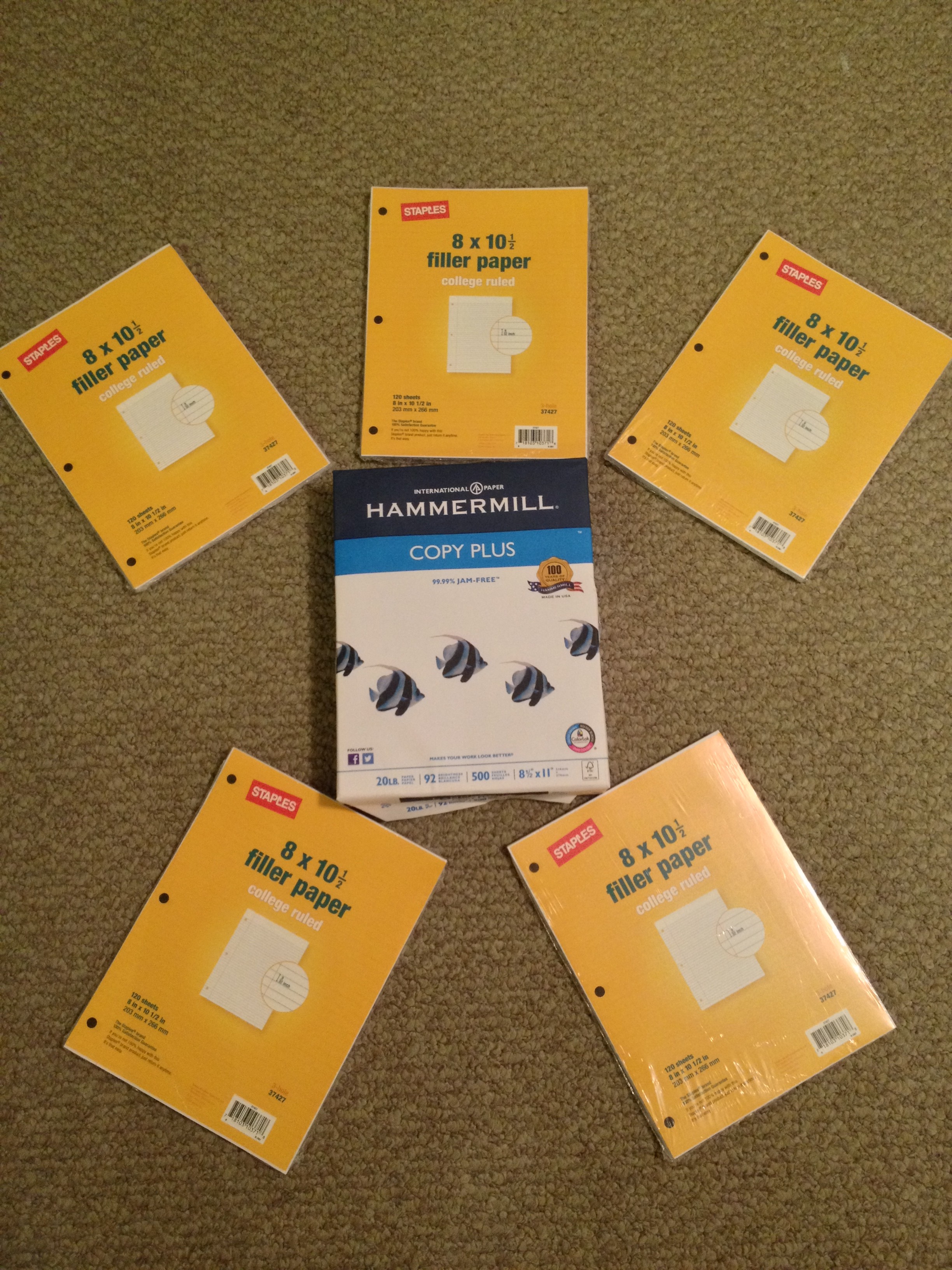
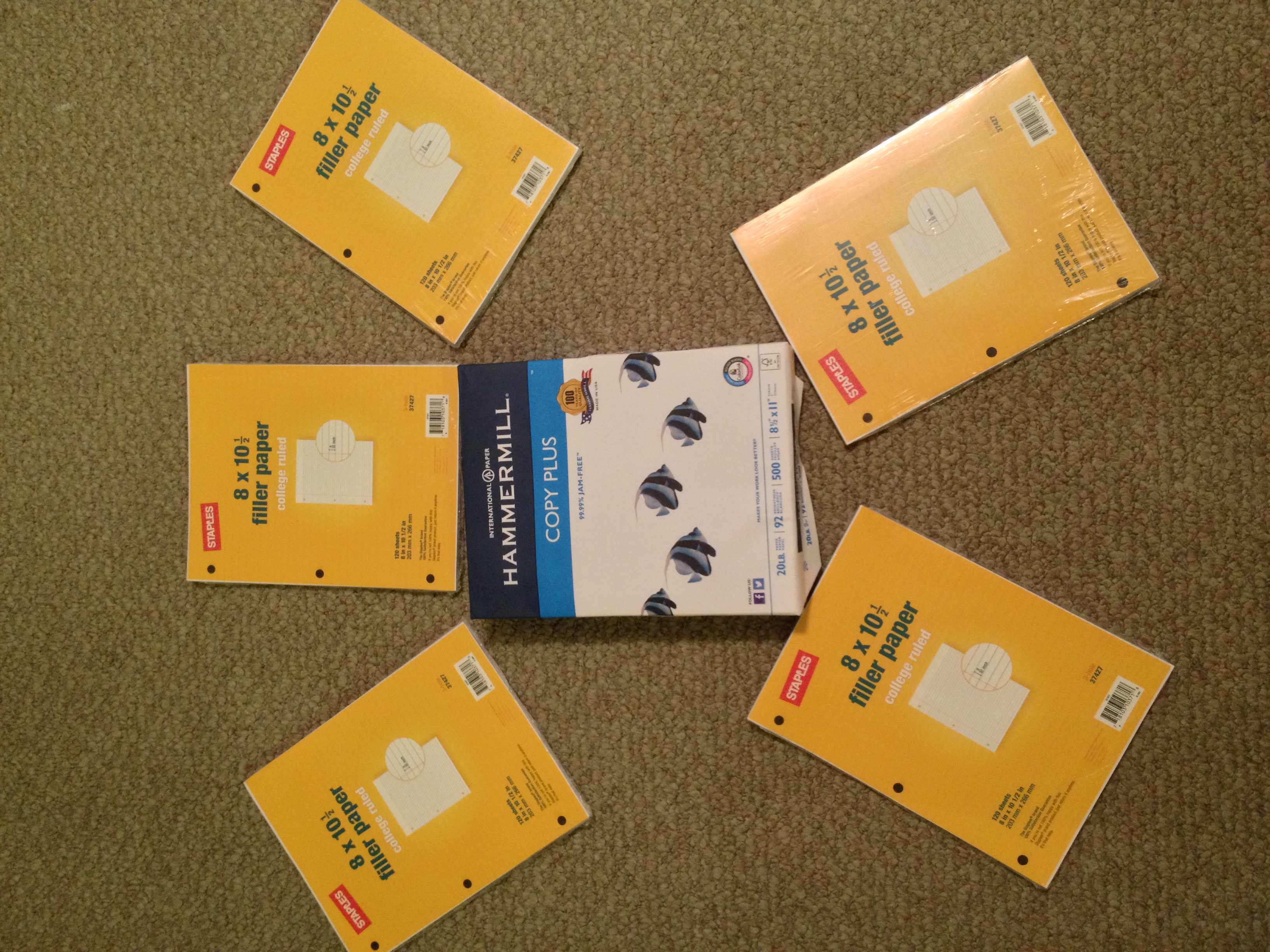
    This week I am going to feature my trip to Staples. The highlight of this trip was free paper after rebate. Though I did have to spend money out of pocket today, I will calculate this as though the paper was free on the spot.

    photo

    Spent: $0.44
    Saved: $11.24
    Total Value: $11.68
    Percent Saved: 96%

    Hammermill Copy Plus Paper, $6.99
    $1.00 off Hammermill Staples Coupon
    $5.99 Staples Easy Rebate
    (Made it FREE!)

    (5) Staples Filler Paper, $0.01 Sale (Minimum $5.00 purchase)

    Question: What deals did you find this week? 

  • What goes into the budget?

    What goes into the budget?

    Now that we have a clear understanding why creating a budget is important, it is now time to start creating our first budget. It is not as complicated as it seems, but it will play a monumental role in bettering your financial situation.

    So, what goes in the budget?

    By: Tax Credits

    Everything. Literally everything you plan to spend during that month goes into the budget. A budget simply involves you listing how much money you expect to have during a particular period and then predicting how much money you will need to spend during that time to live.

    I tend to divide my budget into two major categories and then I create a bunch of sub categories below that.

    Fixed Expenses

    This category is reserved for my bills. Fixed expenses includes those items whose prices usually don’t change much from month to month. This would include things such as:

    • Rent/Mortgage
    • Insurance (Auto, Home, Life, etc.)
    • Utilities
    • Cable
    • Phone
    • Giving
    • Gym Membership
    • Recurring Internet Services (i.e. Evernote)

    Variable Expenses

    This category includes items whose costs are likely to change from month to month. The amount of groceries you buy may be different one month because you’re going to be out of town for a week. You may have a car maintenance/repair that is due one month and not the other. You may purchase your Christmas travel plane ticket in October. And the beat goes on…

    Here are some of the items I include in my variable expenses category:

    • Groceries
    • Personal Care Items
    • Household Items (Cleaners, Furniture, Home Improvement, etc.)
    • Auto Maintenance/Repair
    • Restaurant/Entertainment
    • Books/Music/DVDs
    • Toll Road Fees
    • Medical (co-pays, deductibles, prescriptions)
    • Other items that could vary from month to month such as gifts, membership dues for organizations, additional giving, etc.

    So, how do I get started?

    In order to make this as simple as possible, I am going to suggest that you start doing this on paper first. If you’re comfortable with technology, you can go ahead and create a spreadsheet or use any of the financial software or web tools that I will discuss at a later time.

    Here are some simple steps to get started:

    1. On the left side of your paper, list all of the income you expect to receive in the next month.
    2. On the right side of the paper, list all of your anticipated expenses by category. If you are unaware of how much you spend on certain items such as groceries, gas, etc., you will need to make your best estimate.
    3. Subtract your expenses from your income.
      1. If the answer is a positive number (greater than zero), you have a budget surplus. That money can be used to make extra debt payments or to beef up your savings.
      2. If the answer is a negative number (less than zero), you have budget deficit. You will need to adjust some of your expenses to make it 0 or a positive number.

    Like I mentioned earlier, we are keeping things simple for now so that you have no barriers to getting started. In the future, I will show you other techniques that you can use to create a budget and even provide sample forms that you can print each month or edit on your computer.

    Question: Was creating a budget this way simple or difficult? Why?

  • Why Budget? (Part 5): Budget Gives an Immediate Raise

    Why Budget? (Part 5): Budget Gives an Immediate Raise

    In this short series, I have been sharing five reasons why creating a budget is important and a key factor in achieving your financial goals. Here are the other articles in the series if you need to catch up.

    Reason #1: Budgeting Confronts Bad Habits

    Reason #2: Budgeting Makes You Responsible

    Reason #3: Budgeting Puts You in Control

    Reason #4: Budgeting Releases the Power of Writing Things Down

    Reason #5: Budgeting Gives You an Immediate Raise

    By: Search Engine People Blog

    Believe it or not, creating a budget may leave you with the feeling that you just got a raise. Now that you’ve confronted your bad spending habits and hopefully vowed to eliminate them, you all of a sudden have a lot more money to work with to reach your real goals.

    How do you “get a raise” if you aren’t literally making more money?

    1. You know how much you are bringing home and you’ve already planned your “necessities” spending. You’d be surprised at the number of people who couldn’t tell you without hesitation how much money they make each year or even each month. On top of that, many people don’t even know exactly how much their total priority expenses (housing, utilities, gas, insurance, food/grocery, etc.) are each month. Once you subtract the priority items from how much you bring home, you’ll have what is called “discretionary” or “disposable” income left to do as you please. Simply being aware of your situation provides you with some insight to make it better.
    2. You have cut the fat from your budget. Remember the list of bad habits you listed in Part 1? Still getting that latte everyday? Still paying for that gym membership you don’t use? When is the last time you’ve shopped auto insurance policies? Still eating out too much? Hopefully you have taken a look at your goals and put that against what you’re actually doing in order to see if those habits are hindering your progress.
    3. You will find ways to save money on this items you purchase everyday. Once you start to taste a small bit of success, you will become very excited about continuing your progress and accelerating your progress. One way to do that is to find ways to spend less on the items and services you use everyday. For example, you may initially plan to budget $100 per week for groceries, but now you seek out ways to reduce that to $80 a week, saving you $80 each month. You may discover that your job has a corporate wellness program through the gym you use, which could provide a better monthly rate than want you are paying now. These kind of reductions in spending will only increase the amount of money that you need to save in order to get out of debt, save for a house, save for retirement, etc.

    So, I hope that this introductory series on Budget Maxer has motivated you to take action to reach your financial goals. My motivation will always be to teach you ways to spend your money wisely and to teach you have to save money on the purchases you make everyday. Thank you for visiting my blog, and I hope that you stick around for all of the wonderful tips you will receive in the future.

    Question: Did you feel like you had a “raise” when you started to become aware of your income and expenses?

  • Why Budget? (Part 4): The Power of Written Words

    Why Budget? (Part 4): The Power of Written Words

    In this short series, I have been discussing five reasons why creating a budget is important and a key factor in achieving your financial goals. Here are the other articles in the series if you need to catch up.

    Reason #1: Budgeting Confronts Bad Habits

    Reason #2: Budgeting Makes You Responsible

    Reason #3: Budgeting Puts You in Control

    Reason #4: Creating a Budget Releases the Power Gained By Writing Things Down

    By: Crystal

    Many people understand the extreme power of words. Well, there is something even more powerful than that. The most powerful words are those that are in writing. When there is some sort of legal dispute, anything on paper is infinitely more powerful evidence than something that someone said. Regardless of which goal-setting system you use, they all agree on the importance of writing them down. In my own life, physically writing a daily to-do list increases the likelihood of me actually completing my goals for the day. When we use the power of writing to craft a budget, we release things that increase the likelihood of our success.

    1. It Clears Up Our Desires: I don’t know if it is just me, but my mind can be a rollercoaster when coming up with ideas. Writing things down forces me to slow down and to state my intentions or desires in a succinct manner. I definitely don’t want to write a dissertation about everything that comes in my head, but I pretty much do that when I keep it all in my head. That results in a lot of important ideas getting lost in the clutter. Writing a monthly budget will help you clarify your financial goals.
    2. Writing things down strengthens our memory: It’s one thing to think that you will spend $130 in an area and actually knowing that you will do so. Knowing that you will spend that much in an area such as groceries or gifts will help you remember your goals throughout the month, thus increasing the chances of you actually achieving that goal.
    3. Writing Makes You Accountable: A written budget can act as a sort of contract with yourself or your spouse if you are married. You can even make a game out of it, seeing if you can spend less in areas than you planned.
    4. Writing Helps You Journal Your Progress and Check Trends in Spending: A written budget can act as a journal, allowing you to see how far you have come, see how your spending patterns have changed, and to remind you of certain expenses that only occur during certain times of the year as a reminder to plan for those things in the future. Christmas is in December. Mothers Day is in May.  Three close family member’s birthdays are in October. Yearly membership dues for an organization are due in February. The insurance bill you pay once or three times a year is due in certain months. You get the picture.

    Writing things down helps create the discipline needed to follow through on the goals that you set for yourself. If you put this power to use with your money by creating a budget, you’ll be one step closer to attaining your financial goals.

    Question: In what ways has writing down a goal (in any area) helped you achieve it? 

  • Why Budget? (Part 3): Develops a Sense of Control

    Why Budget? (Part 3): Develops a Sense of Control

    In this short series, I have been discussing five reasons why creating a budget is important and a key factor in achieving your financial goals. The first reason was about confronting bad habits. The second reason was about creating responsibility.

    Reason #3 Creating a Budget Puts You in Control of Your Finances

    By: peasap

    How many times to we wake up to realize that something in our life is out of control? It could be our health and weight. It could be our job performance. It could be our relationships with those in our family. Many times, it is an issue with our finances.

    We grow up. We go to the college of our choice. We have a good time. We graduate and get our first “real job.” We buy a car (with a payment). We rent our first post-college apartment (that we hope is a serious upgrade from what we had in college). We outfit that apartment with furniture and electronics. We buy new clothes. The list goes on. Then all of a sudden, we realize that everything that we’ve built was built with false money! That money is called “credit.”

    Student Loans

    Car Payments

    Credit Cards

    Store Financing (furniture, electronics, appliances, etc.)

    This wonderful life that we began to build during our twenties turns out to have been built on a false foundation (financially speaking) that has finally come due. Whether it’s through a pay cut, a layoff, or even maxing out all available credit lines, we realize that our finances are totally out of control. Some throw their hands up and act as if their situation is the fault of someone else (that someone being the “economy”). Responsible people will look in the mirror and realize that the person staring back at them is a huge part of the problem.

    That “Man in the Mirror” moment is the point in which change will start to occur if you have the wherewithal to do the necessary work. Sitting down and actually creating and following a budget will put you in control of your finances.

    Here’s how you will gain more control over your finances by using a budget:

    1. Face your reality – Are you satisfied with your income? Do you actually have something to show for what you make? If you are satisfied with your income, then make it work for you. If you are making what others consider to be “a lot,” isn’t it kind of frustrating to be struggling to get by?
    2. Sets Boundaries Are you making decisions that are best for you (and your family if you are married) or are you doing what others are expecting of you?
    3. Sets Expectations Early – If you know that you only have a certain amount of money to spend in a certain category (restaurant, entertainment, books, etc.), then you’ll be less likely to make those impulse purchases that get so many people in trouble.

    Creating that budget will give you a since of control over your money that you did not have beforehand. Instead of waiting for life to happen to you, you go out and make life happen. You make a plan, you do your absolute best to follow it, and then you reap the rewards later.

    Question: What does personal control of your finances look like to you?

  • Why Budget? (Part 2): It Makes You Responsible

    Why Budget? (Part 2): It Makes You Responsible

    Look after the pennies and the pounds will look after themselves

    Creative Commons License Tristan Martin via Compfight

    In this short series, I have been discussing five reasons why creating a budget is important and a key factor in achieving your financial goals. The first reason for budgeting involved confronting bad habits.

    Reason #2: Creating a Budget Makes You Face Your Reality and Makes You Responsible for Your Future

    Many people live their lives with no purpose or direction. Even if they do not do that in every aspect of their lives, for some reason, people tend to live that way with their finances. It does not matter if it is someone going from minimum wage job to slightly above minimum wage job or someone with several graduate degrees and a lucrative income. Oftentimes, we are simply ignorant or unaware of the things we already have, which oftentimes ends up keeping us from winning. Sometimes, our unwillingness to face our own reality prevents us from having to make the necessary changes to improve our lives.

    Creating a budget will force you to take a big picture look at your finances. For some people, it will be like taking an inventory of their entire lives. In addition to documenting the expenses you need to reduce or eliminate, creating a budget will force you to look at what you have and reach one of two conclusions:

    1. I am not making enough to meet my goals. What am I going to do about that?
    2. I am making a lot more money than I realize. Why am I in such a financial mess?


    I believe that there are more people in the second camp than many are willing to admit. We make a reasonable amount of money, but our choices prevent us from  making the most of what we earn.

    So, what ways can we become less financially “ignorant?”

    1. Take your 2012 W-2 forms and know exactly how much you made in the previous year. If you are in a new job or you have irregular income, make the best estimate on how much you plan to make in 2013. (If you are married, both of you should know each other’s information.)
    2. Ask yourself this question: Do I need to make more money this instant in order to improve my financial situation, or do I need to make better spending decisions? (Aspiring to make more money isn’t bad, but it won’t solve your problems if you have bad spending habits.)
    3. Compare your expense list you created in post 1 and compare it to your income. Do you have money left over or are you spending more than you take in?

    Knowing what you actually make is a key ingredient to writing a good budget. Once you are aware of what you already have, you can use it to your advantage or realize that you have to make whatever changes are needed to improve it.

    Question: Do you know how much you make? What realizations did you have when you compared your income to your typical expenses?

  • Why Budget? (Part 1): Confronts Bad Habits

    Why Budget? (Part 1): Confronts Bad Habits

    By: David Goehring

    I believe that creating and following a budget is the key ingredient in taking control of your finances and achieving your goals. In this introductory series, I will reveal five reasons why creating a budget is essential to hitting typical targets such as getting out of debt, buying a home, giving more to church or charity, saving for retirement, etc.

    Creating a Budget Forces You to Confront Bad Habits

    Many people get a job, get that paycheck (especially if it is a bigger one than before), and just mindlessly spend their money. Some may have the discipline to sit down and pay all of their bills first, but then every dollar after that is fair game. Keep doing this for a long time, and you’ll all of a sudden realize that your income is not enough, which leads to using credit to fill the gaps. Weeks, months, or a few years later, you’re sitting there with thousands in credit card, car, and furniture debt in addition to all of the student loan debt you accrued during college. That’s how I lived as a college student. I got my financial aid check after all tuition and fees were paid and pretty much spent away. Now, I did my best to make sure that money lasted until the end of the semester, but eventually, I had to pull out the credit card to make it.

    Creating that first budget is going to force you to look at your spending habits, because you are going to have to assign each dollar you make to a certain category and only spend that amount of money. While looking over your spending habits, some of you will realize that you barely have enough to meet the basic necessities of life while others will realize that though they make a lot of money, they are not spending it in the best way possible to achieve the real goals they have in life.

    How often do we complain about the lack of money to reach our goals only to realize that we are spending a lot of money each month on items that are not really necessary? Is that daily latte from the Starbucks really worth it? What about the gym membership that is virtually inactive? Does the amount spent watching cable, Netflix or Hulu Plus worth the expense? Do I really need to eat that much take-out? Given the different circumstances people are in, I could go on and on with different examples, but I think you understand what I am saying.

    Creating a budget and sticking to it is going to force you to confront these habits and make sacrifices. This is the only way to achieve the goals that you wish to achieve when it comes to your money. Though I am sure that there are many people out there who are truly not making enough money, increasing income alone will not solve many people’s problems. It will just give them more money to spend poorly. So, before we begin the process of creating our first budget, spend some time analyzing your spending habits. Think about the expenses you need to reduce as well as the expenses you need to eliminate completely. You will need this information to create the best budget to get you on track to fulfilling your financial dreams.

    If you like this post, please share it with your friends through email and social media. It will help me tremendously. I would also love to hear your comments below.

    Question: What are some items in your budget that you feel you need to reduce or eliminate completely?